Practice-Level Access
Additional detail, process and artefacts available at interview.
TL;DR
Xero grants client access one staff member at a time. That doesn't match how practices work, and it pushes them toward shared logins. Data extracts from two of our largest practices showed ex-staff still held access to client organisations. I advocated for a fix over several years, ran the discovery, and designed the alpha for Practice-Level Access: a move from user-to-organisation to practice-to-organisation access. It's now a roadmapped FY28 initiative tied to organisation management and Just Ask Xero, and I've handed the design groundwork to Ashlee West while I'm on parental leave.
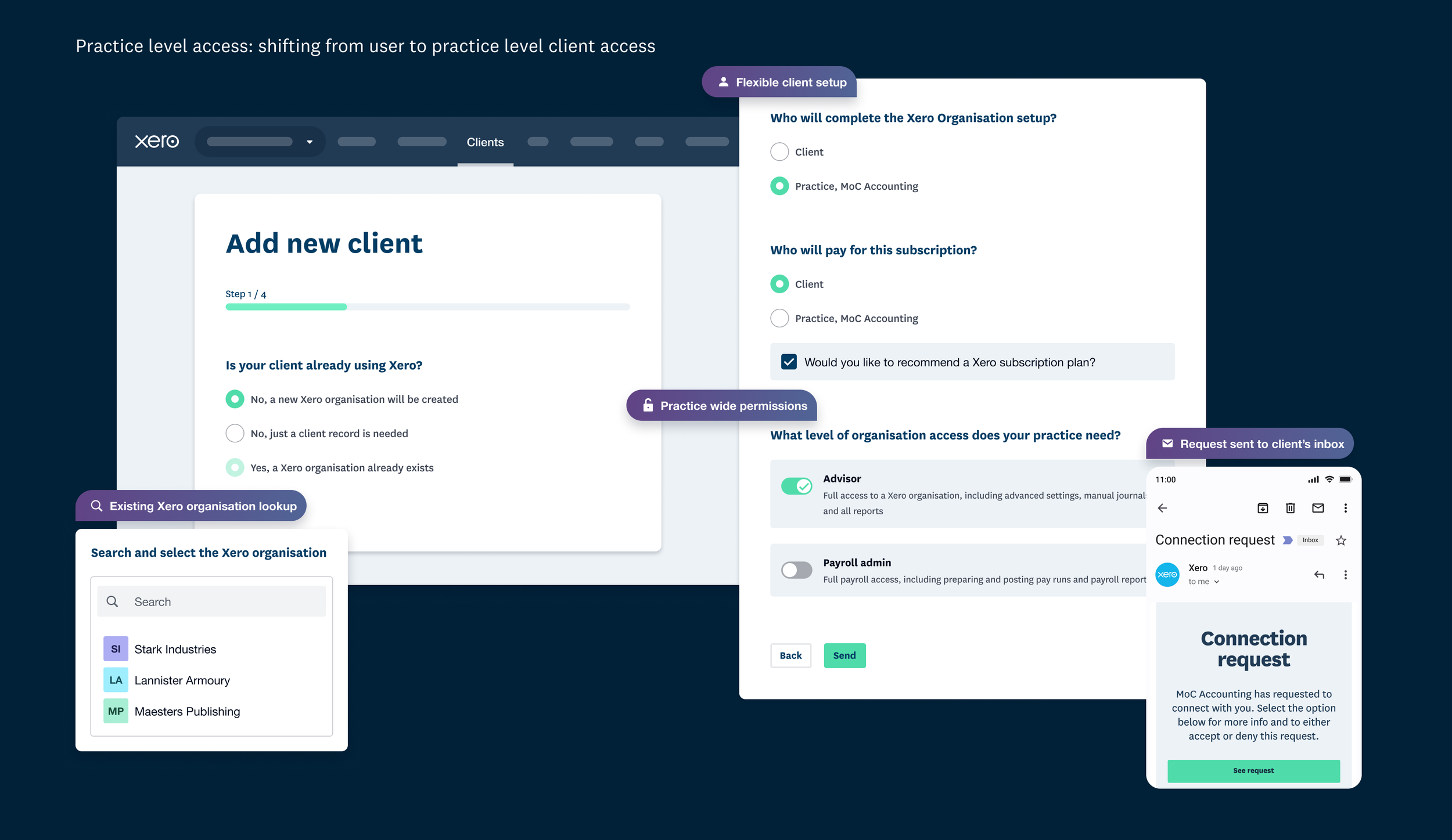
Practice-level access allows an accounting practice to proactively request access to client Xero organisations
The problem
Every accountant or bookkeeper is added individually to each client's organisation. Reallocating work means re-granting access by hand, "Manage Users" becomes a bottleneck, and practices lean on small business owners for routine changes. The workaround is the real risk: practices share a single login with broad access across their clients. I'd heard this across multiple research studies over several years. It wasn't an interface problem, it was a structural mismatch.
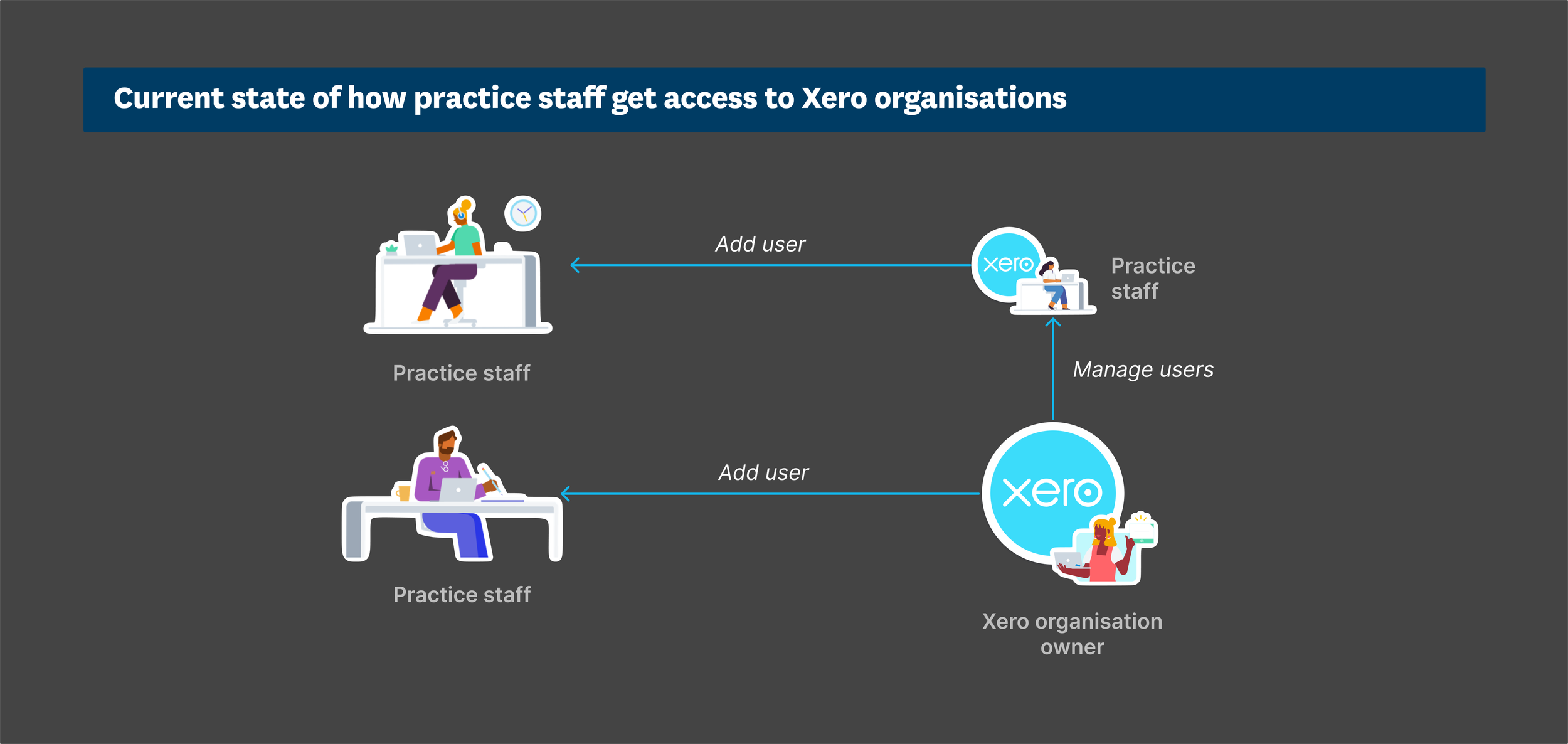
Current state involved the client adding individual staff to their Xero organisation one by one
The approach
I proposed moving to a practice-to-organisation relationship. A small business grants access to the practice once, and the practice manages its own staff internally, with a default permission level and client-specific customisation on top. I ran discovery interviews, pulled together the recurring research signals, and wrote the case that took it to a PRD. I then designed the alpha end to end with product, engineering and research: requesting access from the client list, org list or client record, scoping staff access, and removing it from either end. The same link also gives organisation management, Partner Hub permissions and future AI access controls a clear answer to "who owns this relationship".
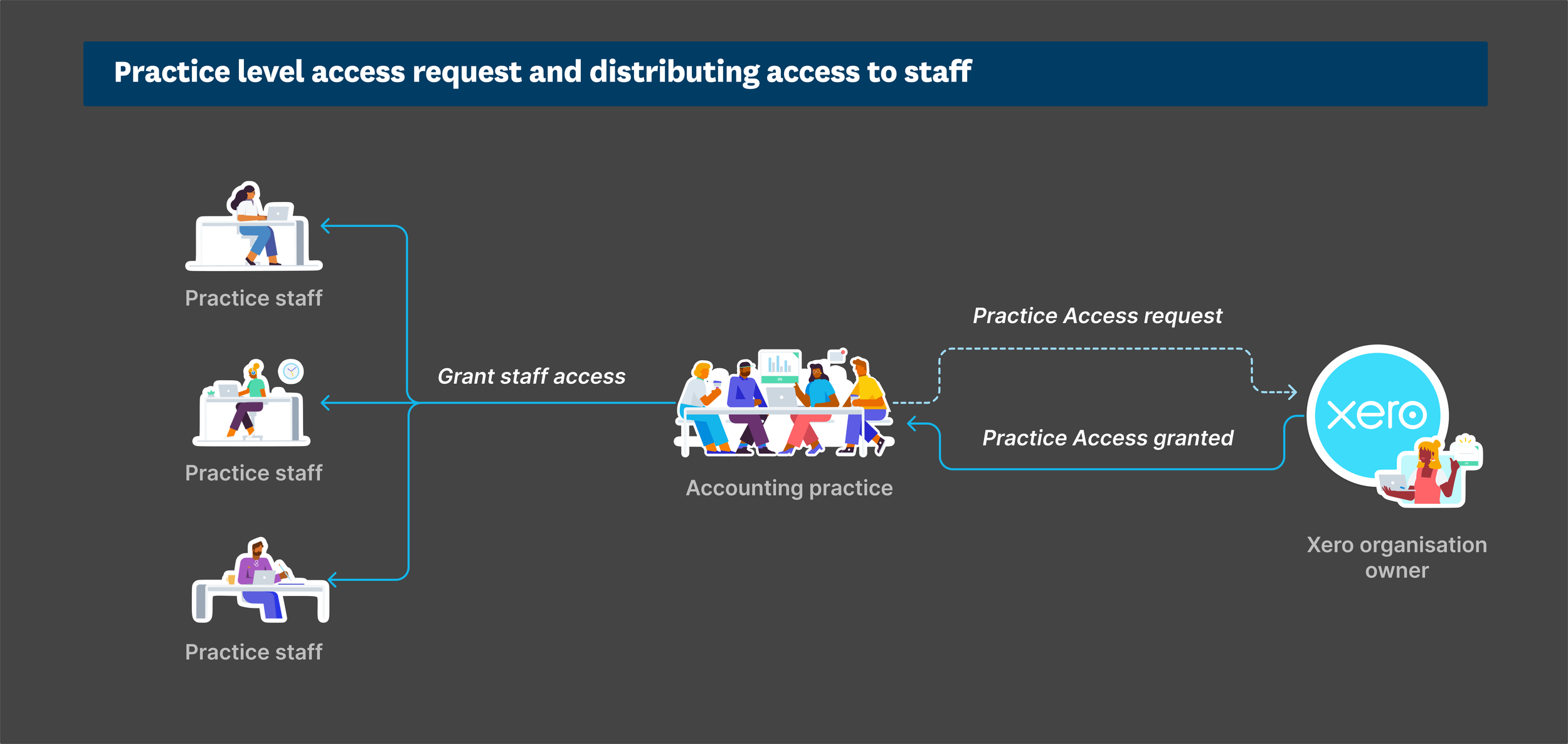
Practice-level access mirrors the real-world relationship where a client employs a practice to do their work and the practice delegates the work and permissions as needed to their staff.
The hard calls
Transparency. Accountants worried that showing a practice's full staff list would make clients uneasy. I argued for full transparency anyway: who can see a business's financial data is something they're entitled to know. Rather than assert it, I tested it. Small businesses had no real concerns, and Ashlee's separate research confirmed it. Migration is still only partly solved. We can't lock practices out or force mass re-authentication, so existing "Manage Users" holders transition directly, and everyone else keeps read-only access until practice-level access is approved. It needs more engineering thinking, and I've flagged it as a known complexity.
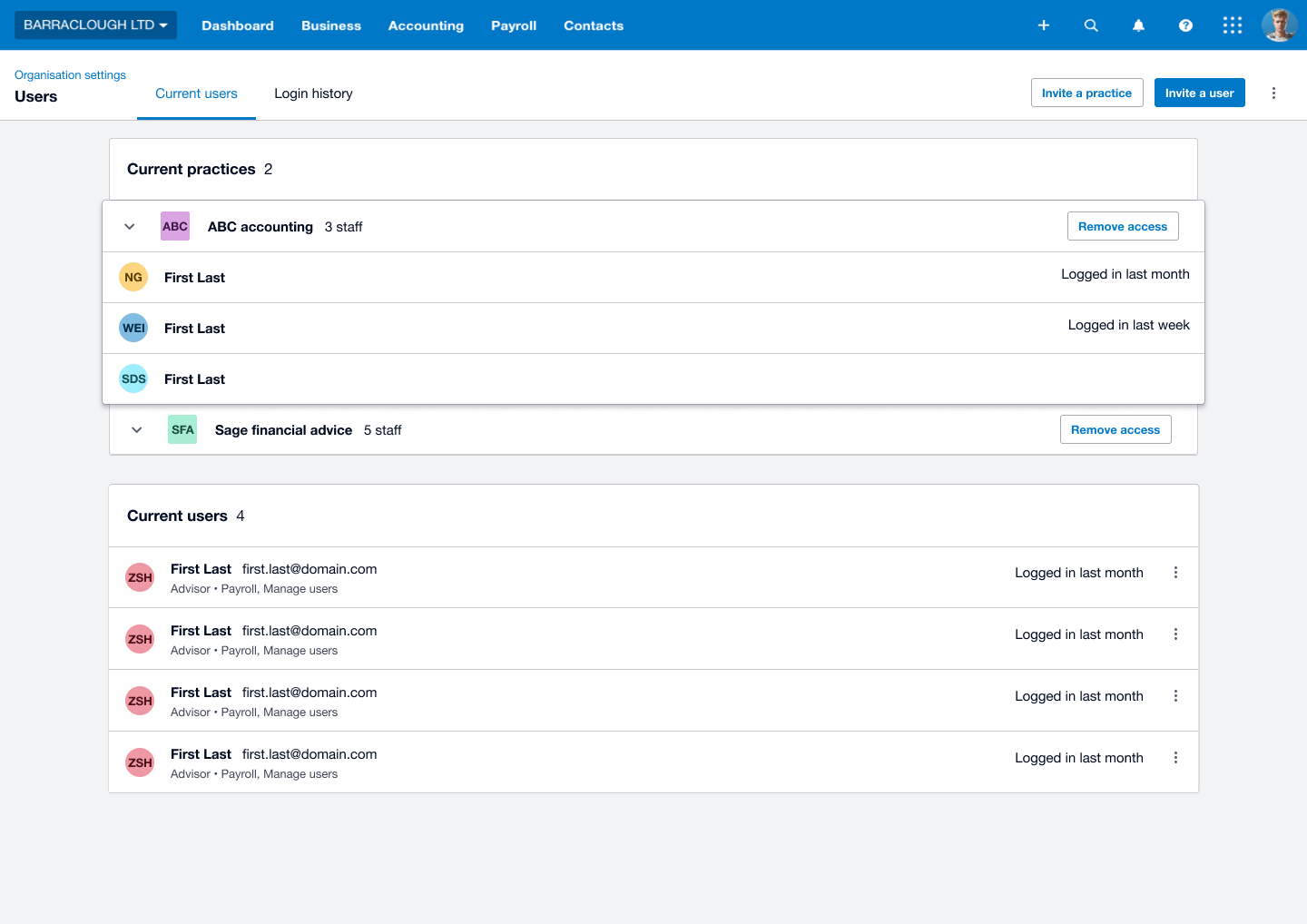
Client can see the practices that have access to their organisation and the specific staff who have been given access
Results
Proved a security gap with customer data. Data extracts from two of our largest practices showed many ex-staff still had access to client organisations, turning a recurring pain point into a security priority.
Validated the concept beyond my own conviction. Years of advocacy based on recurring research signals were independently confirmed through adjacent research studies, moving this from "a pattern I kept seeing" to a validated product direction.
Shaped a foundational piece of infrastructure. Practice-Level Access is now positioned as an enabler for organisation management, Partner Hub permission alignment, subscription management, and future AI access controls, not a standalone feature.
Delivered a ready-to-build alpha. The first-release experience design, covering request, grant, and removal flows, is complete and ready to ship once prioritised.
Secured a place on the roadmap. The work is now tied to strategic FY28 initiatives, including organisation management and Xero's AI assistant (Just Ask Xero), and has moved from an advocated idea to a planned initiative.
Demand is growing. There are around 260 recent client-invite friction CX cases, and Xero leadership is actively considering Practice Grant for larger firms. The PRD targets an 80% reduction in CX cases for org-access security concerns within 3 months of release.
learnings
Our dedicated research study of six AU and UK practitioners validated the direction and confirmed that staff-level permissions on top of practice access are a must-have.
“That’s much better...one hundred percent”
P6 (UK), reacting to practice-level organisation access.
“I think that it’s important. They need to be able to see who has access… It’s their data, and it’s important”
P3 (AU) reacting to staff disability in the client organisation.
“It seems unprofessional to always be going to the client, can you add so and so”
P1 (AU) commenting on the current state of permissions
The alpha is ready to build, the work is on the FY28 roadmap, and it's positioned as foundational infrastructure rather than a standalone feature. Two things I'd carry forward. Repeating an observation doesn't move work forward, a shaped concept and a PRD does. And foundational work rarely ships first time: this was deprioritised and reframed as XPM and HQ merged into Partner Hub, so it has to keep proving its relevance and be ready when the moment comes.