Customer vision and design principles
Additional detail, process and artefacts available at interview.
TL;DR
I collaborated with another designer to run workshops and user research sessions to craft an aspirational customer vision. We distilled the vision into five relatable and applicable design principles to be used by peers and teams working in our product domain, grounded in a 3-day kickoff with 20 to 30 participants. The vision is listed in Xero's central index of design-led visions.

Excerpt from the customer vision story - A Xero practice managing their staff in 2025
AIM
Define a customer vision for staff management and permissions within Xero's practice management products. Then distil that vision into design principles to guide other product teams working on staff- and permissions-related features.
PROCESS
Staff and permissions was a new product area for a majority of the team, so we decided to plan and facilitate a series of discovery workshops to help the team:
Understand the current state of staff and permissions in our products
Gather and synthesise related existing user research reports
Frame the core user experience, technical and business problems we faced
After our team had grounded themselves in the problem space, we entered a discovery phase; this included technical, product, and design discovery. I worked with another designer to plan a design sprint to kick-start our discovery. The outcome was a staff management and permissions concept created by a multidisciplinary team and tested with real users. Two additional rounds of iteration, validation and learning resulted in a data access and permissions model that balanced usability, flexibility and data security.
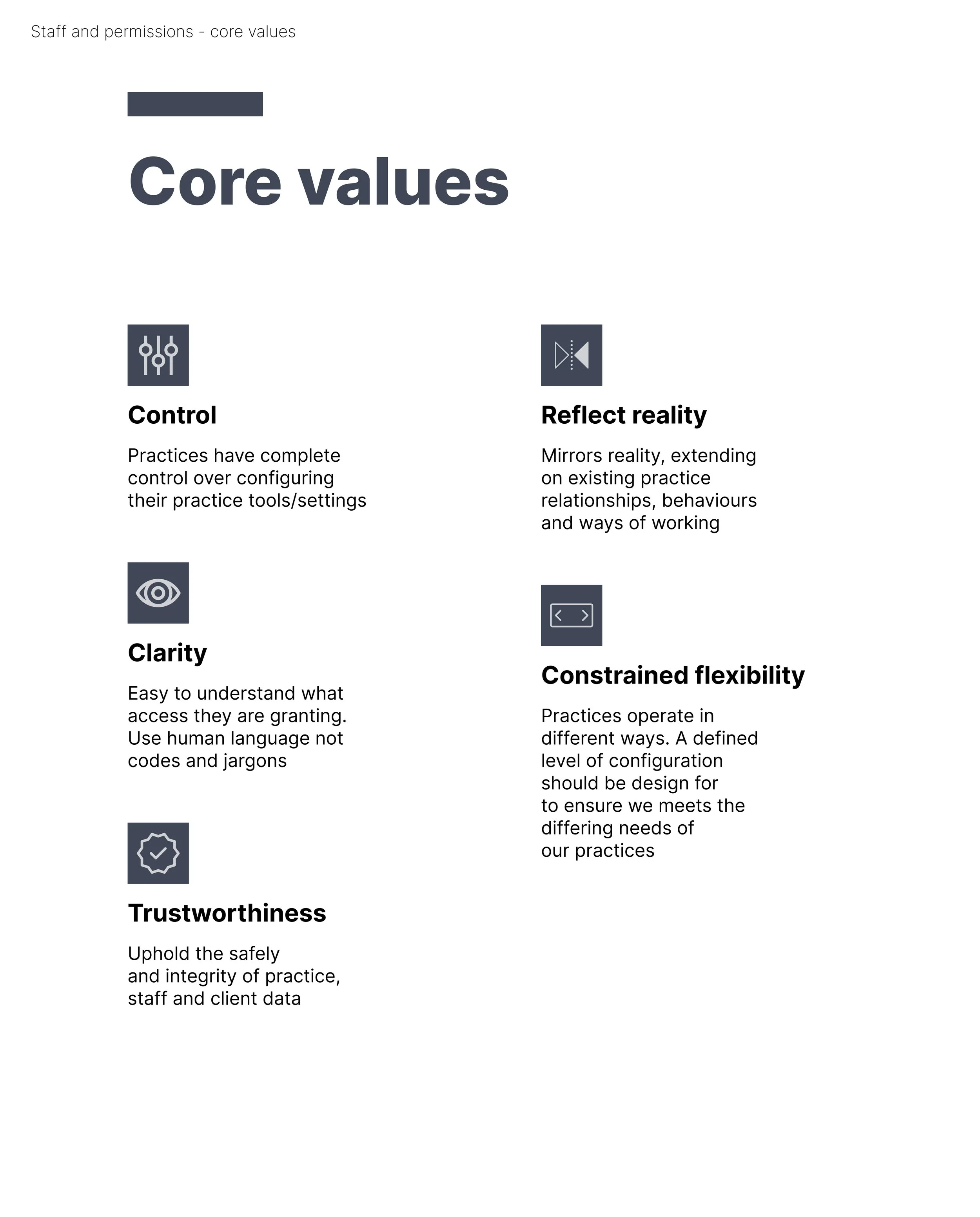
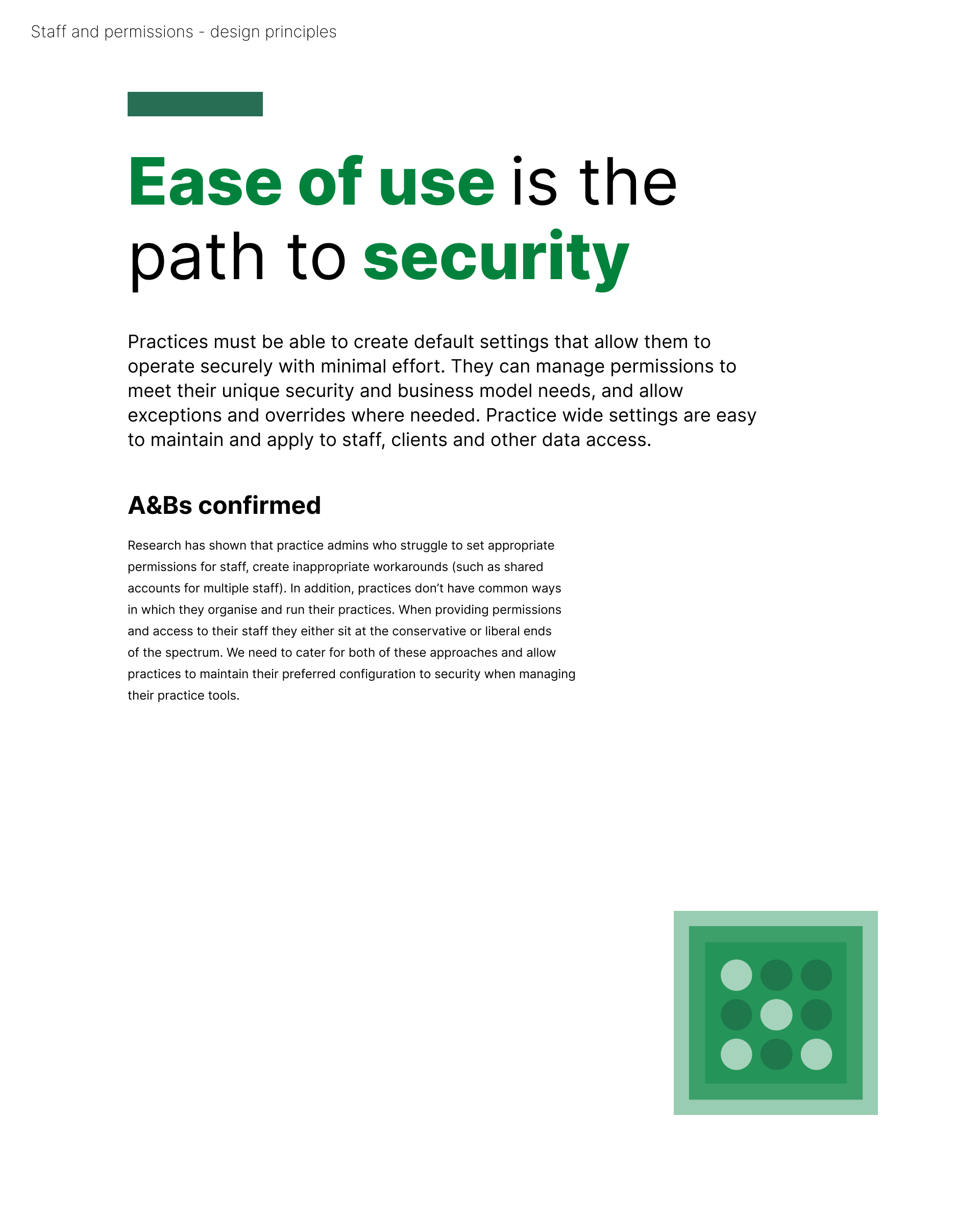
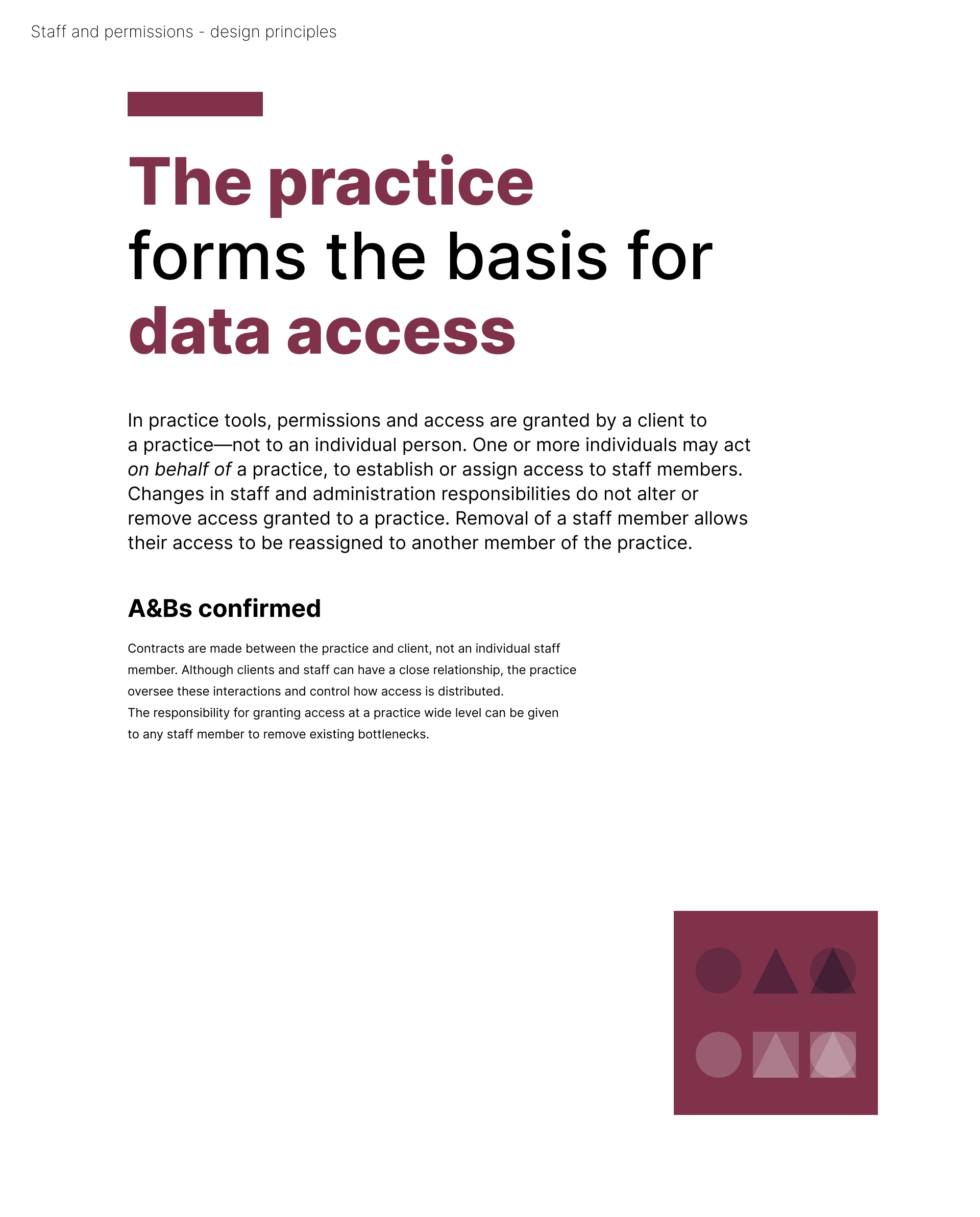
We developed a customer vision story and a set of design principles based on our newly created concept. The customer vision was a user-centric narrative designed to inspire and provide direction. The design principles aimed at providing alignment and assisting decision-making for all teams across our products.
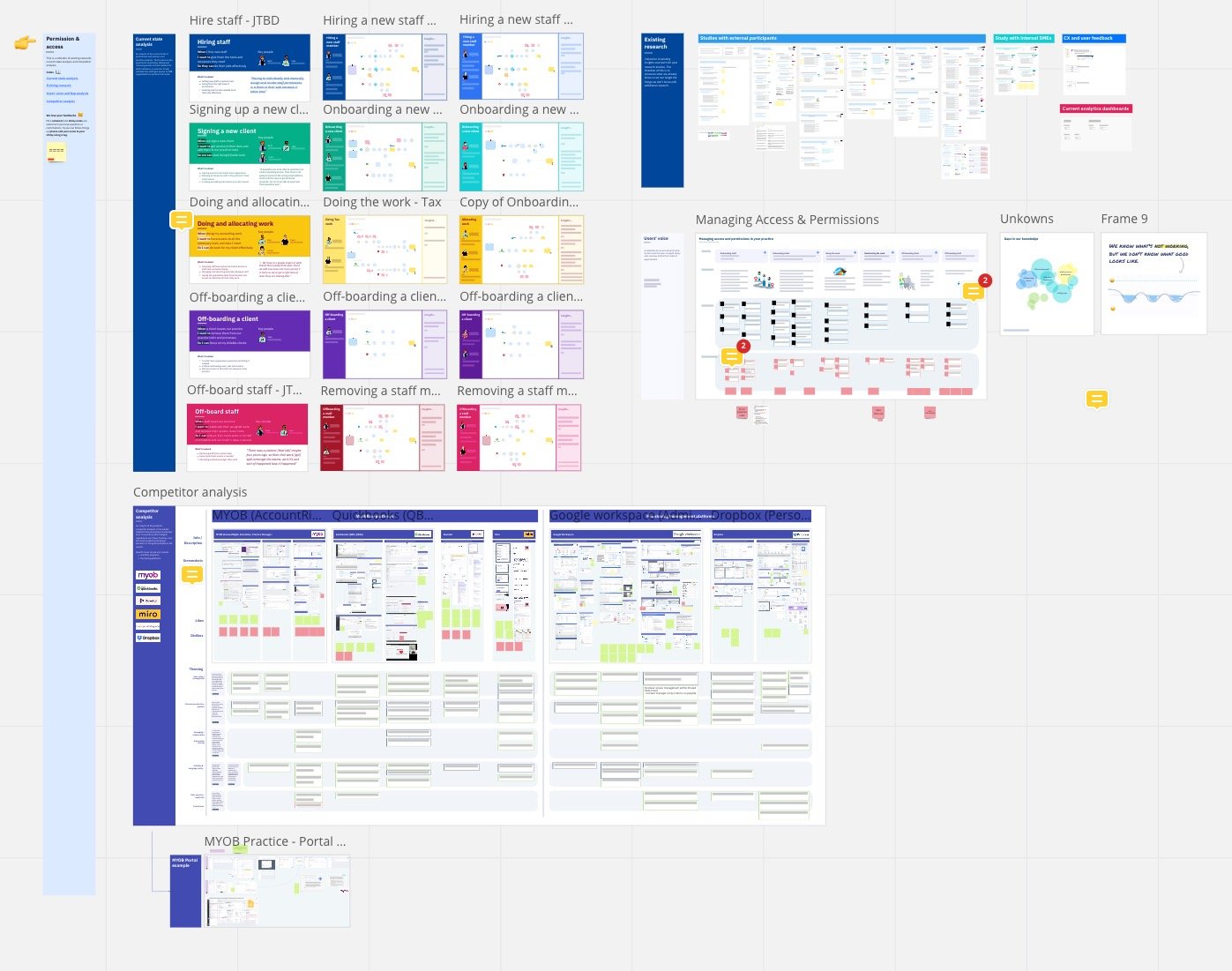
Initial design discovery board consolidating key user jobs, existing research, competitor analysis and journey maps

Remote-friendly design sprint Miro board used to create our product concept
RESULTS
The series of workshops grounded the team's understanding of the new product domain and laid the foundation for discovery. The design sprint and further design discovery provided a user-validated product direction. The customer vision provided an aspiration and user-centred direction for our team. Staff and permissions design principles have become an important part of how we collaborate with other teams, letting them make aligned decisions without needing us in every conversation, and have increased the visibility and importance of our work within our product portfolio. The vision also informed later work, including the Single Staff Experience and Practice-Level Access.
Learnings
A shared vision does more work than a shared spec. Grounding the team in workshops before jumping to solutions gave the customer vision and design principles real staying power; they became a reference other teams reached for on their own, not just an artefact from one project.
DESIGN PRINCIPLES - STAFF AND PERMISSIONS




Customer vision story - staff and permissions